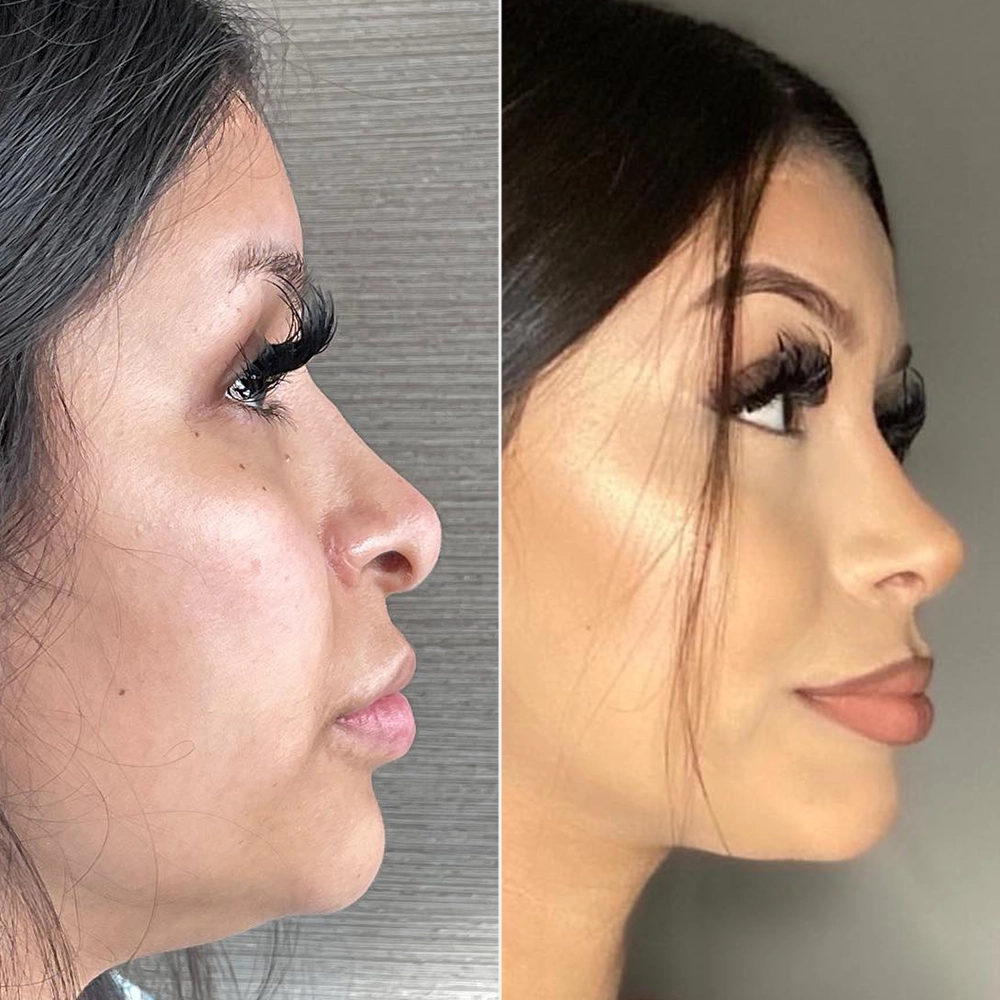
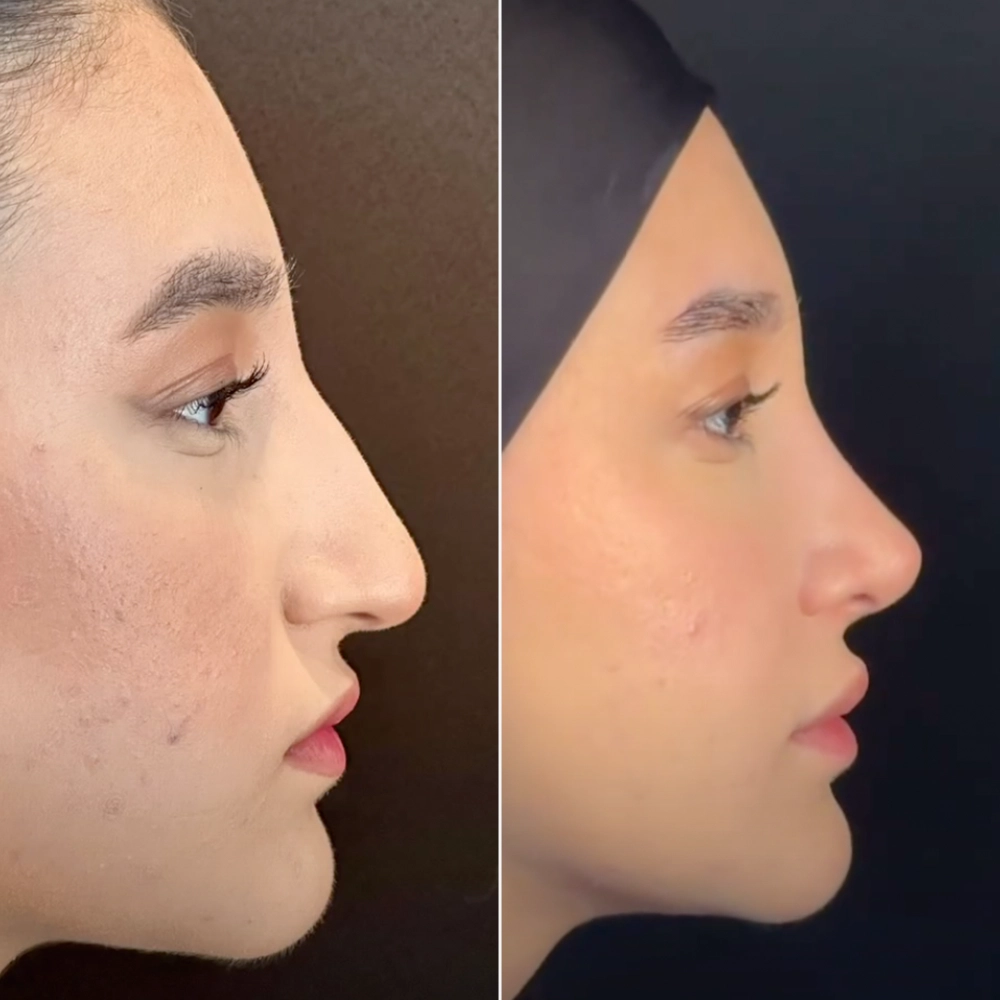
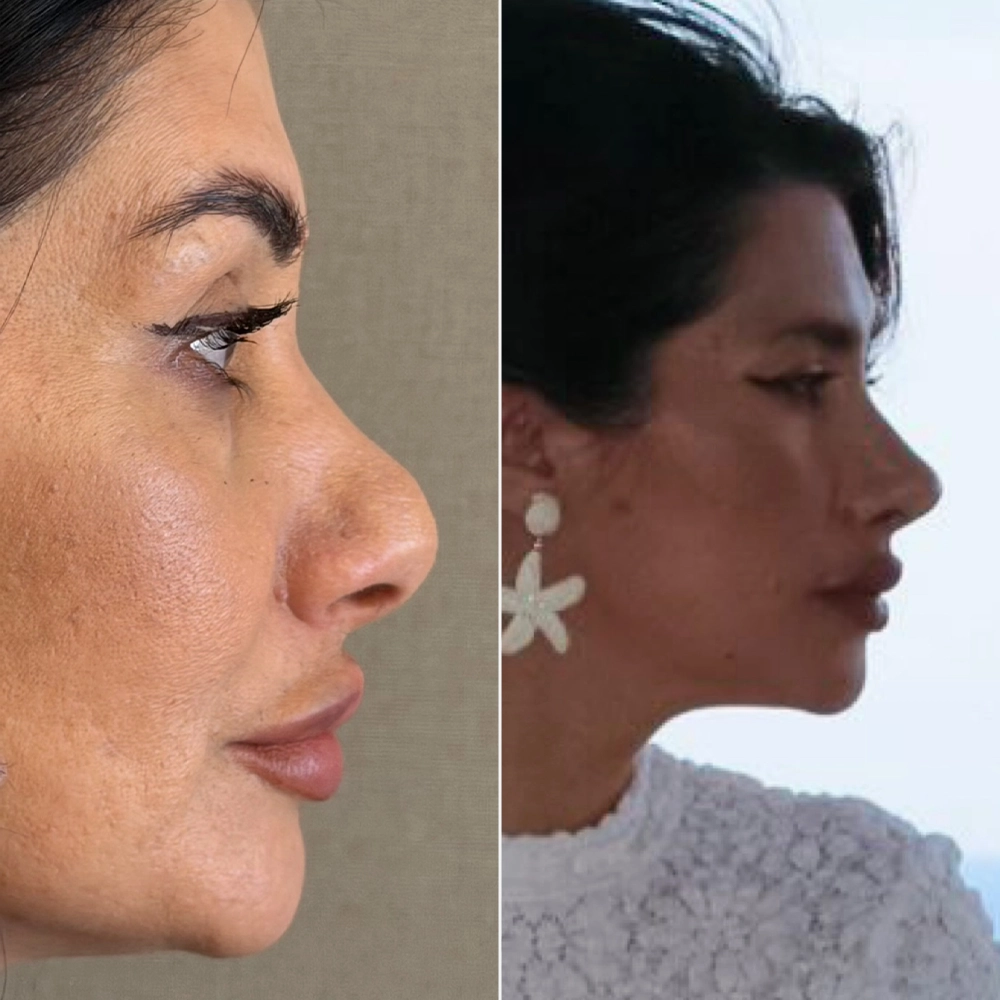
Nasal shape & facial balance
Revision rhinoplasty may address shape concerns remaining after previous nasal surgery. Surgical planning considers the existing nasal structure, facial proportions and realistic possibilities for refinement.
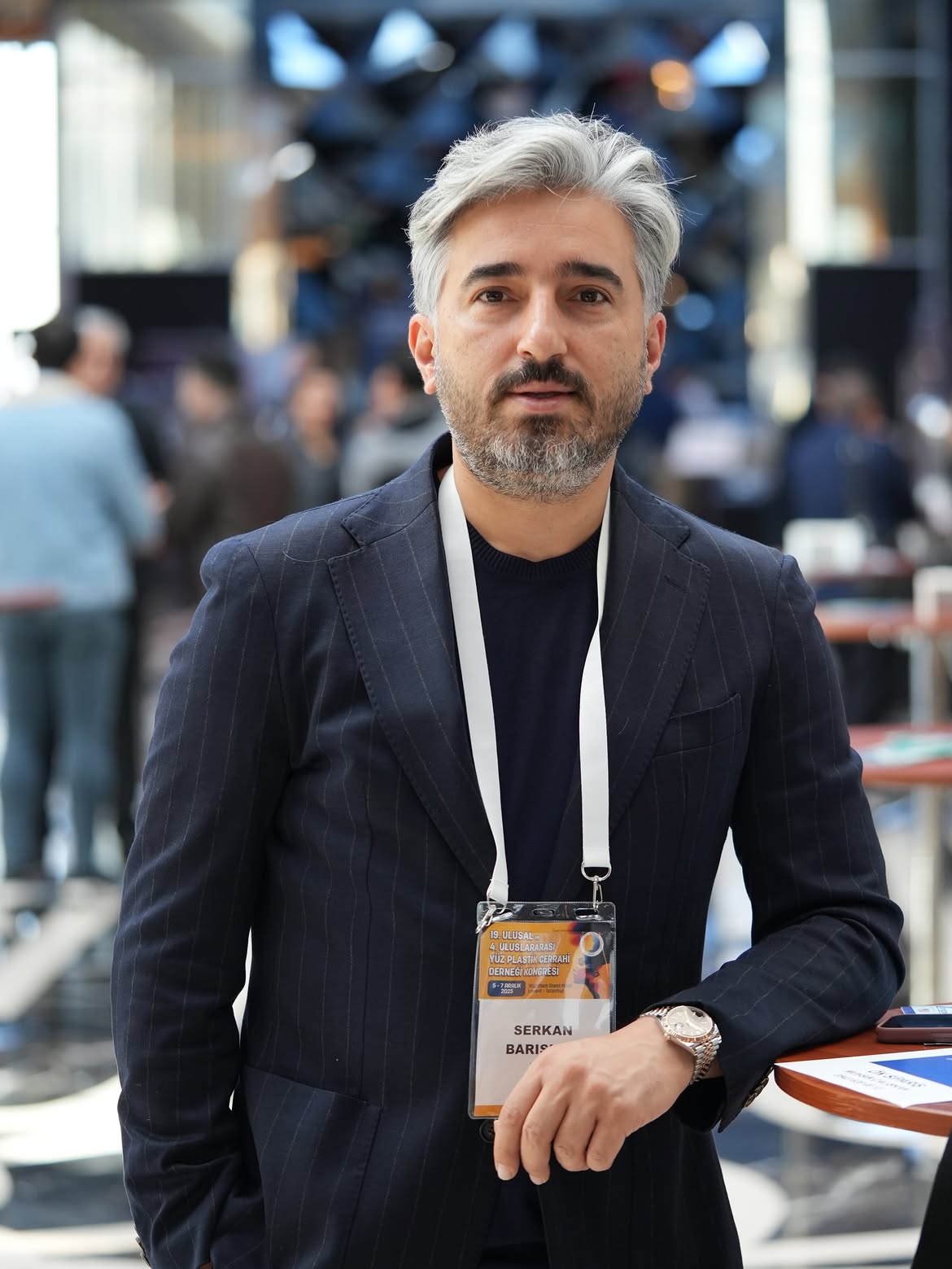
Revision rhinoplasty with Dr. Serkan Barışkan, an ENT and Head-Neck Surgeon in Denizli, Turkey. A personalised approach to addressing structural, functional and aesthetic concerns following previous nasal surgery.
Revision rhinoplasty, also called secondary rhinoplasty, is surgery to correct the shape, structure or breathing of the nose after a previous nose operation. It differs from a first rhinoplasty because the surgeon works with scar tissue, altered anatomy and often less cartilage, so planning starts from what the earlier surgery changed and what remains.
Patients consider it when a first operation healed unpredictably, left them unhappy with the result, or affected their airway. If you haven't had nose surgery before, see rhinoplasty in Turkey instead.
Because of that, every revision begins with a full structural reassessment — what was done before, what remains, and what is realistically achievable now, shown to you on computer imaging so you can discuss the planned direction of change together. As an ENT & Head-Neck surgeon, Dr. Barışkan assesses the airway alongside the shape.
The aim is an honest, stable improvement — not a promise to erase the first surgery, but a nose that reads as yours and breathes well. A revision done well never looks "operated" or over-done: the people who know you simply notice you looking more comfortable, without being able to say why.
Typical ranges only — revision cases vary more than first operations. Your own plan — technique, timings and anaesthesia — is confirmed at consultation.
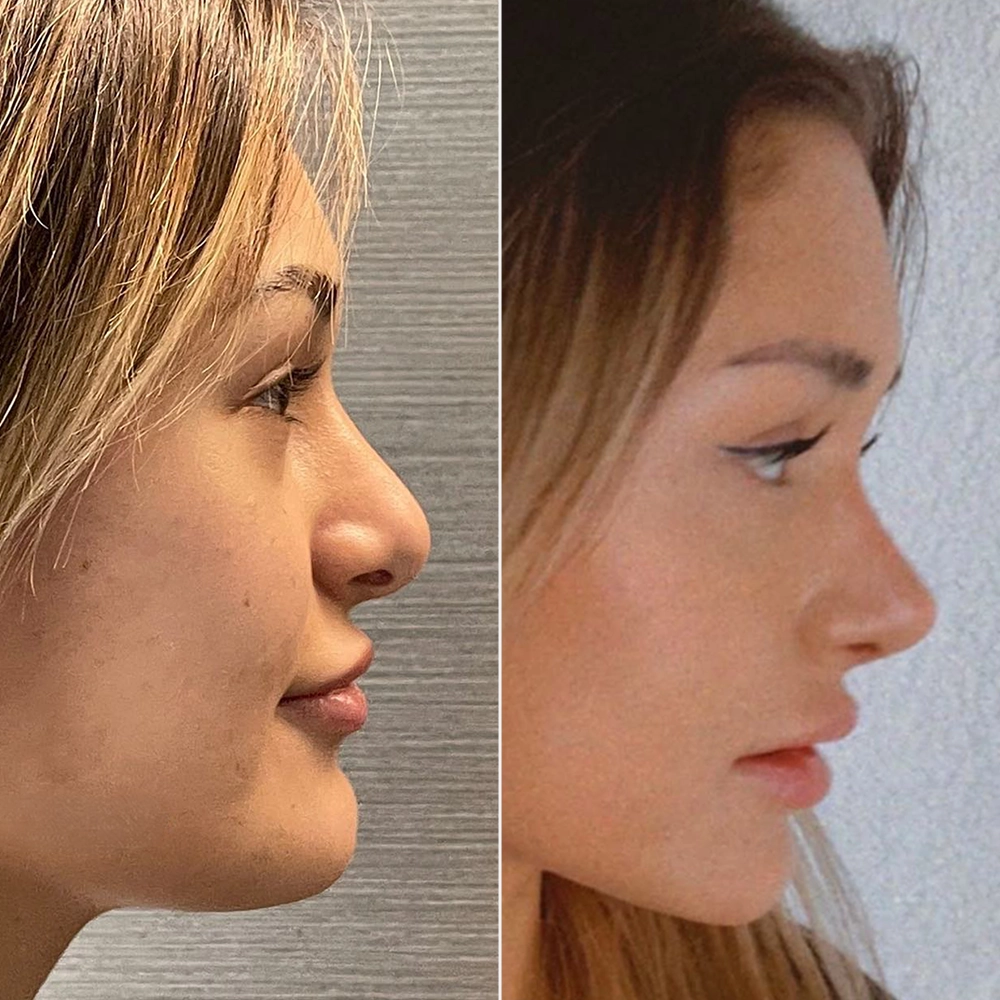
Revision rhinoplasty can address concerns that remain after previous nasal surgery, including changes in shape, symmetry, structural support or breathing.
Because every nose has a different surgical history, careful assessment is essential. The aim is to identify what can reasonably be improved while respecting the limitations of the existing anatomy — so the plan you agree on is one you understand before surgery.
Explore revision rhinoplasty cases and learn how individual surgical plans may address concerns following previous nasal surgery. Each case requires an assessment of existing anatomy, previous procedures and realistic surgical goals.
Revision rhinoplasty may address shape concerns remaining after previous nasal surgery. Surgical planning considers the existing nasal structure, facial proportions and realistic possibilities for refinement.
Previous rhinoplasty can leave changes in cartilage support and nasal contours. Revision assessment identifies structural concerns and determines whether additional support or reshaping may be appropriate.
Revision surgery may address concerns involving nasal tip position, definition or support. The surgical approach is guided by the remaining anatomy, scar tissue and the patient's individual goals.
Revision rhinoplasty can involve both aesthetic and functional concerns after a previous operation. A detailed ENT assessment helps establish whether structural and airway changes can be considered together.
With every surgical or interventional procedure, results may vary from person to person.
Many revision patients have both an appearance concern and a breathing problem after their first operation. An ENT (ear, nose and throat) surgeon is trained in the structure and function of the nose, so the septum, nasal valves and airway can be assessed alongside the shape and, where appropriate, addressed in the same operation.
A revision often has to rebuild before it refines — restoring support and the airway where they were weakened, then refining the shape.
The goal is still a nose that fits your own face — natural and balanced, never over-rotated or fake-looking, and never a template copied onto everyone. Whether the aim is a softer, more feminine line or a straighter profile, it is planned around your anatomy.
Revision rhinoplasty may involve an open or closed approach, depending on the complexity of the previous surgery and the structural changes required. Dr. Barışkan determines the most appropriate technique after a detailed assessment of the nasal anatomy.
Where the tip has lost definition or support, cartilage is reshaped and reinforced so it is designed to hold its position over time.
The nasal septum and internal airway structures are assessed for problems that may contribute to breathing difficulties. Where appropriate, functional corrections may be incorporated into the surgical plan. Functional rhinoplasty →
Where a previous operation has weakened the framework, support grafts can help keep the result stable as it settles. Whether they are needed depends on the earlier surgery and your current anatomy.
Cartilage grafting may be necessary when a previous operation has weakened or removed important nasal support structures. Depending on the anatomy and the amount of cartilage available, grafts may be obtained from the nasal septum, ear or rib.
Not every revision requires grafting. The decision depends on the structural assessment, breathing function and the changes needed to achieve a stable result — and it is explained to you as part of your plan.
A previous operation left you struggling to breathe through one or both sides.
Ask about this →Too much bone or cartilage removed — a scooped, weak or collapsed profile.
Ask about this →A nose that healed crooked, twisted or uneven from the front.
Ask about this →A tip that lost support, looks pinched, or has fallen over time.
Ask about this →Visible edges, bumps or irregularities you can see or feel.
Ask about this →A nose that looks done rather than natural — softened back toward your own features.
Ask about this →What a revision can achieve is limited by the scar tissue, skin thickness and cartilage that remain after previous surgery. Thick or scarred skin may soften fine detail, and some changes may not be fully reversible. These limits are assessed and explained before surgery, so your goals are matched to what your anatomy can realistically support.
Short clips from real visits — including cast-removal day.
A typical plan — your exact stay is confirmed when your plan is agreed. See the full patient journey →
A review of your previous surgery, structural facial analysis with computer imaging, and a plan agreed before you book flights.
Airport transfer, accommodation, and your pre-operative assessment.
The procedure itself, with a full surgical team and an overnight stay.
Guided recovery, cast removal, and a final review — your surgeon advises when it is appropriate to travel home.
Remote check-ins through the first year, with direct access between them.
Revision rhinoplasty is usually performed under general anaesthesia and often takes longer than a first operation, typically 2–4 hours. The surgeon reaches the framework through an open or closed approach, releases scar tissue, corrects the septum where needed, and restores support — with grafts only where the structure requires them.
General anaesthesia, with a full surgical and anaesthetic team monitoring throughout.
Depending on your previous surgery, the framework is reached through a small incision across the columella (open) or from inside the nostrils (closed).
Bone and cartilage are refined to the plan agreed at your consultation — reduced, straightened or built up as needed.
Any deviation is corrected and the airway opened where breathing is affected.
The tip and profile are balanced and checked from every angle.
Where extra support is needed, grafts secure the structure; a light cast then protects the nose while it settles.
Most patients return to everyday life after about two weeks, once the cast is off and visible bruising has faded. Swelling settles more slowly than after a first operation: the shape keeps refining through the first year, and some revision cases take 12–18 months or longer to reach their most stable appearance.
Swelling and congestion are at their most; you're looked after and kept comfortable.
The cast and any sutures come off. Your surgeon will review your healing progress and advise when it is appropriate for you to travel home.
Most visible bruising has faded; most people return to everyday life and light activity.
The nose reads naturally day to day, while fine swelling keeps settling.
Swelling continues to improve, and the nasal shape becomes more defined. Subtle changes may still occur, particularly around the nasal tip.
The nose continues to settle as tissues heal. Some revision cases, particularly those involving extensive structural reconstruction, may take longer to reach their most stable appearance.
Recovery times vary from person to person, depending on your anatomy, skin type, previous surgery and the extent of the revision.
There is no fixed price list. What a revision involves — how much was changed in the first surgery, whether the airway needs correcting, whether cartilage grafts are needed — changes the quote, so you receive a personalised quote once your photos and surgical history have been reviewed.
Share photos — front, profile, three-quarter and base view — and tell us when your previous surgery was and what concerns you now. You'll receive a personalised plan and cost estimate, with no obligation.
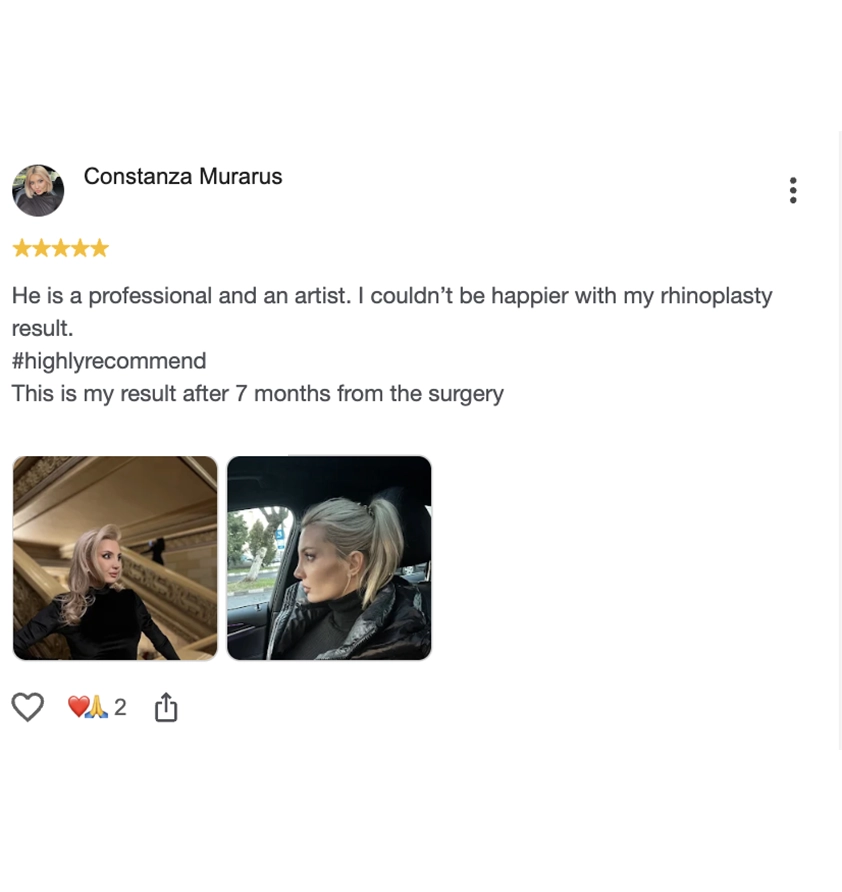
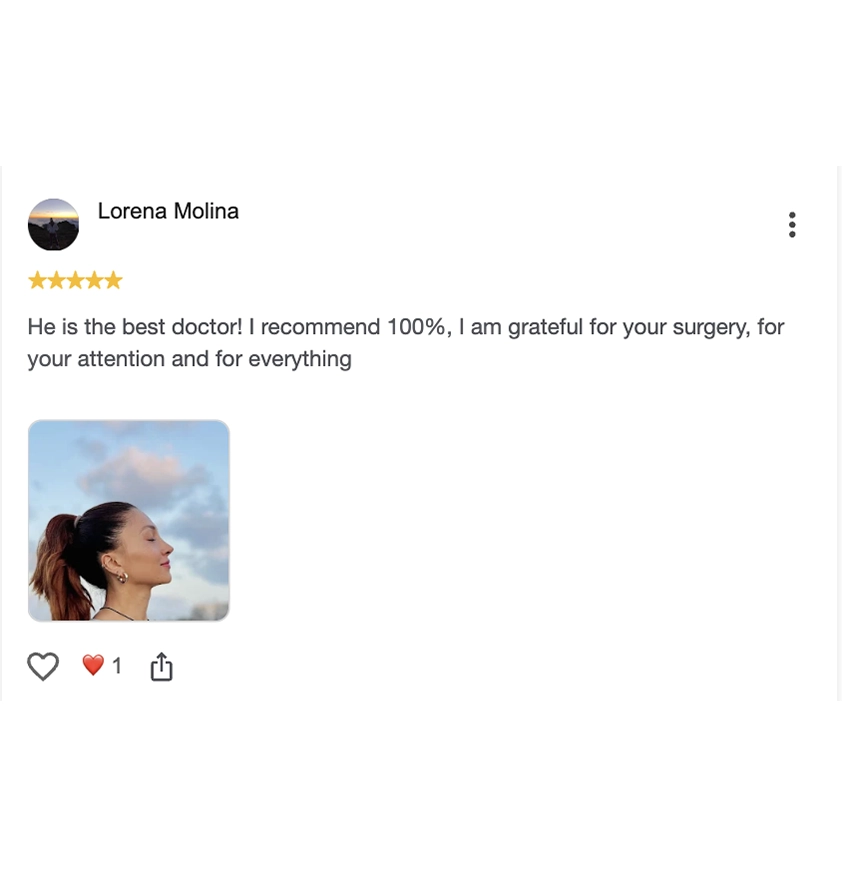
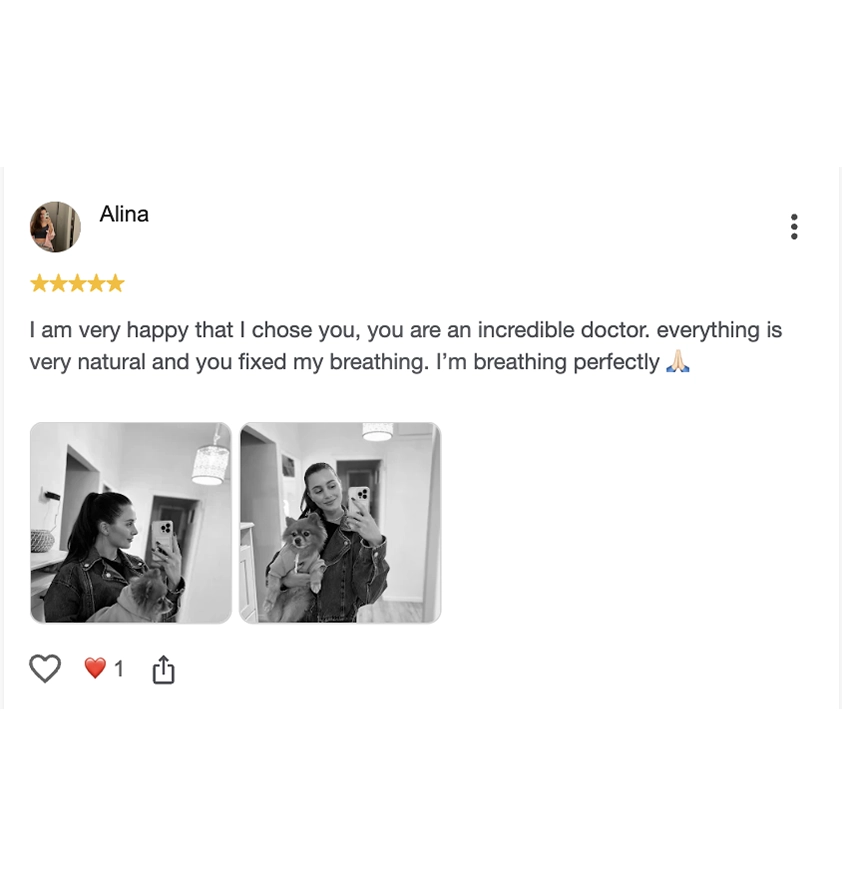
Google reviews from Dr. Barışkan's rhinoplasty and septorhinoplasty patients, shown in their own words.

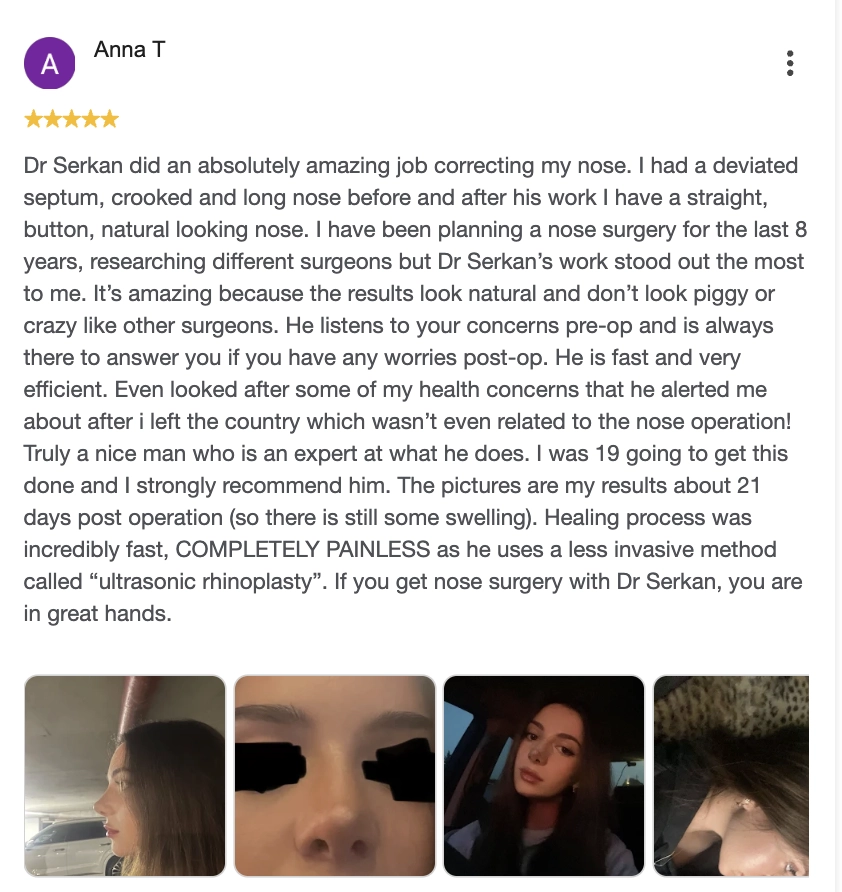
Dr Serkan did an absolutely amazing job correcting my nose. I had a deviated septum, crooked and long nose before and after his work I have a straight, button, natural looking nose. I have been planning a nose surgery for the last 8 years, researching different surgeons but Dr Serkan’s work stood out the most to me. It’s amazing because the results look natural and don’t look piggy or crazy like other surgeons. He listens to your concerns pre-op and is always there to answer you if you have any worries post-op. He is fast and very efficient. Even looked after some of my health concerns that he alerted me about after i left the country which wasn’t even related to the nose operation! Truly a nice man who is an expert at what he does. I was 19 going to get this done and I strongly recommend him. The pictures are my results about 21 days post operation (so there is still some swelling). Healing process was incredibly fast, COMPLETELY PAINLESS as he uses a less invasive method called “ultrasonic rhinoplasty”. If you get nose surgery with Dr Serkan, you are in great hands.

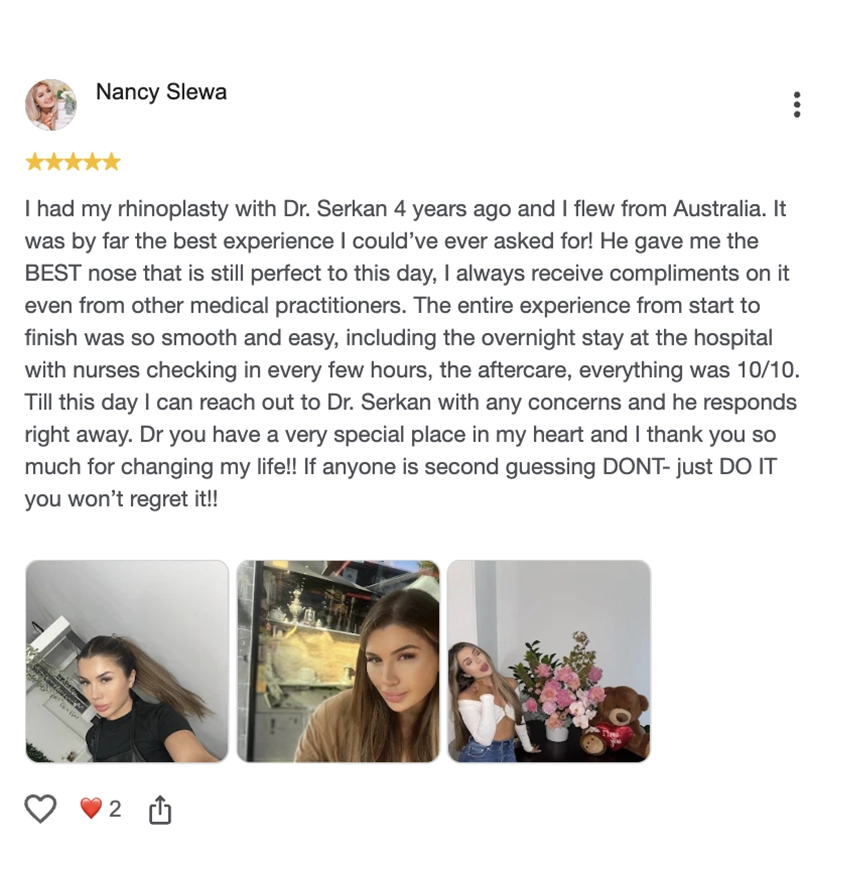
I had my rhinoplasty with Dr. Serkan 4 years ago and I flew from Australia. It was by far the best experience I could’ve ever asked for! He gave me the BEST nose that is still perfect to this day, I always receive compliments on it even from other medical practitioners. The entire experience from start to finish was so smooth and easy, including the overnight stay at the hospital with nurses checking in every few hours, the aftercare, everything was 10/10. Till this day I can reach out to Dr. Serkan with any concerns and he responds right away. Dr you have a very special place in my heart and I thank you so much for changing my life!! If anyone is second guessing DONT - just DO IT, you won’t regret it!!

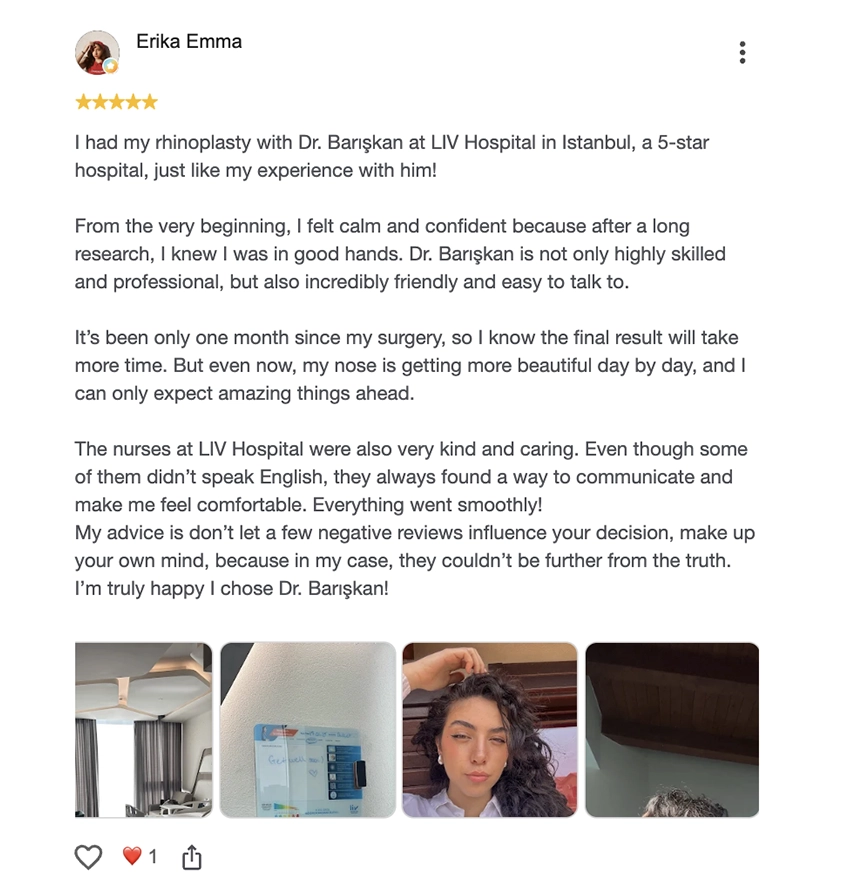
I had my rhinoplasty with Dr. Barışkan and it was a 5-star experience, just like the hospital! From the very beginning, I felt calm and confident because after a long research, I knew I was in good hands. Dr. Barışkan is not only highly skilled and professional, but also incredibly friendly and easy to talk to. It’s been only one month since my surgery, so I know the final result will take more time. But even now, my nose is getting more beautiful day by day. The nurses were also very kind and caring — even though some of them didn’t speak English, they always found a way to communicate and make me feel comfortable. Everything went smoothly! My advice is don’t let a few negative reviews influence your decision, make up your own mind. I’m truly happy I chose Dr. Barışkan!

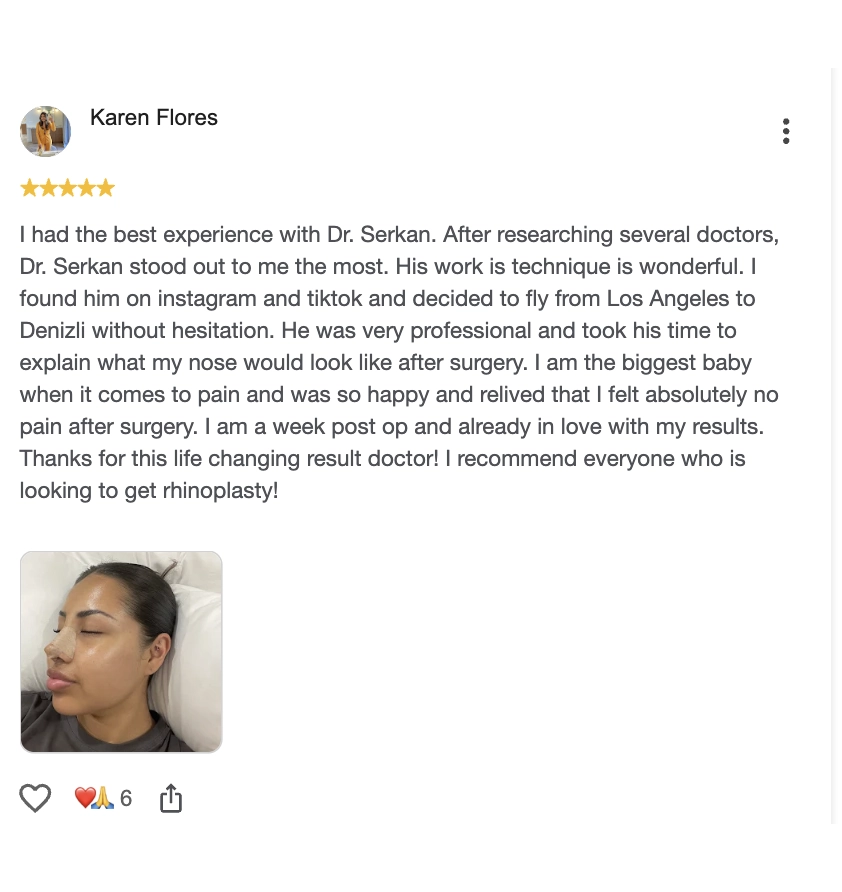
I had the best experience with Dr. Serkan. After researching several doctors, Dr. Serkan stood out to me the most. His work is wonderful. I found him on instagram and tiktok and decided to fly from Los Angeles to Denizli without hesitation. He was very professional and took his time to explain what my nose would look like after surgery. I am the biggest baby when it comes to pain and was so happy and relieved that I felt absolutely no pain after surgery. I am a week post op and already in love with my results. Thanks for this life changing result doctor! I recommend everyone who is looking to get rhinoplasty!

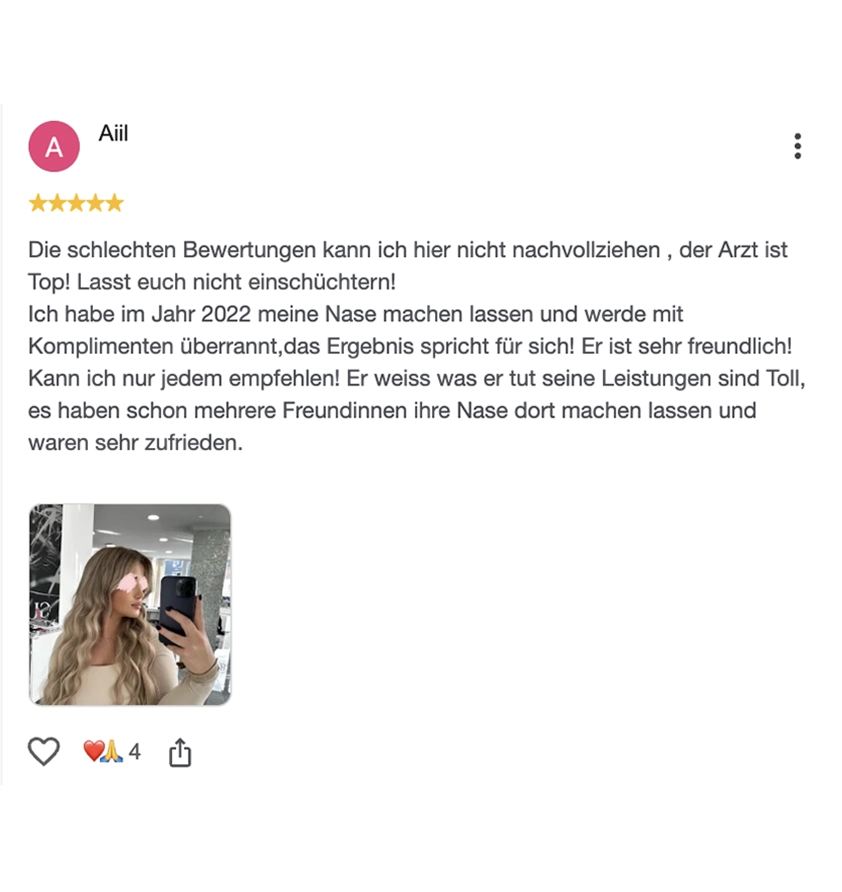
Die schlechten Bewertungen kann ich hier nicht nachvollziehen, der Arzt ist Top! Lasst euch nicht einschüchtern! Ich habe im Jahr 2022 meine Nase machen lassen und werde mit Komplimenten überrannt, das Ergebnis spricht für sich! Er ist sehr freundlich! Kann ich nur jedem empfehlen! Er weiss was er tut, seine Leistungen sind Toll, es haben schon mehrere Freundinnen ihre Nase dort machen lassen und waren sehr zufrieden.

He is a professional and an artist. I couldn’t be happier with my rhinoplasty result. Highly recommend. This is my result after 7 months from the surgery.

He is the best doctor! I recommend 100%, I am grateful for your surgery, for your attention and for everything.

I am very happy that I chose you, you are an incredible doctor. Everything is very natural and you fixed my breathing. I’m breathing perfectly.
Revision surgery can be more complex because previous procedures may have altered the nasal anatomy and created scar tissue, often leaving less cartilage to work with. It usually needs a more detailed assessment, and the plan depends on the condition of the remaining tissues.
Not always to the same degree, because what can be achieved depends on what remains after the previous surgery. Your realistic options are discussed honestly before anything is agreed.
Generally around 12 months, so the tissues have had time to settle. A breathing or structural problem may sometimes need attention sooner, and this is assessed individually.
Not always — cartilage grafting is considered when additional structural support or reconstruction is needed. Where it is, cartilage may be taken from the septum, ear or rib, depending on what is available.
Often, when breathing difficulties are caused by the septum or internal nasal structures. As an ENT surgeon, Dr. Barışkan assesses the airway alongside the shape, and functional corrections are included in the plan where appropriate.
Yes — many revision patients had their first operation elsewhere, in Turkey or abroad. Every case starts with a full reassessment of your photos and surgical history, including any previous operation notes you have.
There is no fixed price, because revision complexity varies widely. You receive a personalised quote once your photos, surgical history or consultation have been reviewed.
Revision swelling usually settles more slowly than after a first operation, with most improvement over the first 12–18 months. Cases involving extensive structural reconstruction may take longer to reach their most stable appearance.
Further revision may be possible, but suitability depends on the remaining nasal structure, scar tissue and previous surgical history. A detailed examination is needed to assess the potential benefits and limitations.
Last reviewed October 2026. The clinical information on this page is written and reviewed by the operating surgeon. It is general guidance, not a substitute for a personal consultation.
Send a few photos, tell us about your previous surgery and what you'd like to change — you'll get a personalised plan and cost estimate, with no obligation.
Share a few details and the team will come back to you — in Türkçe, English or Русский.