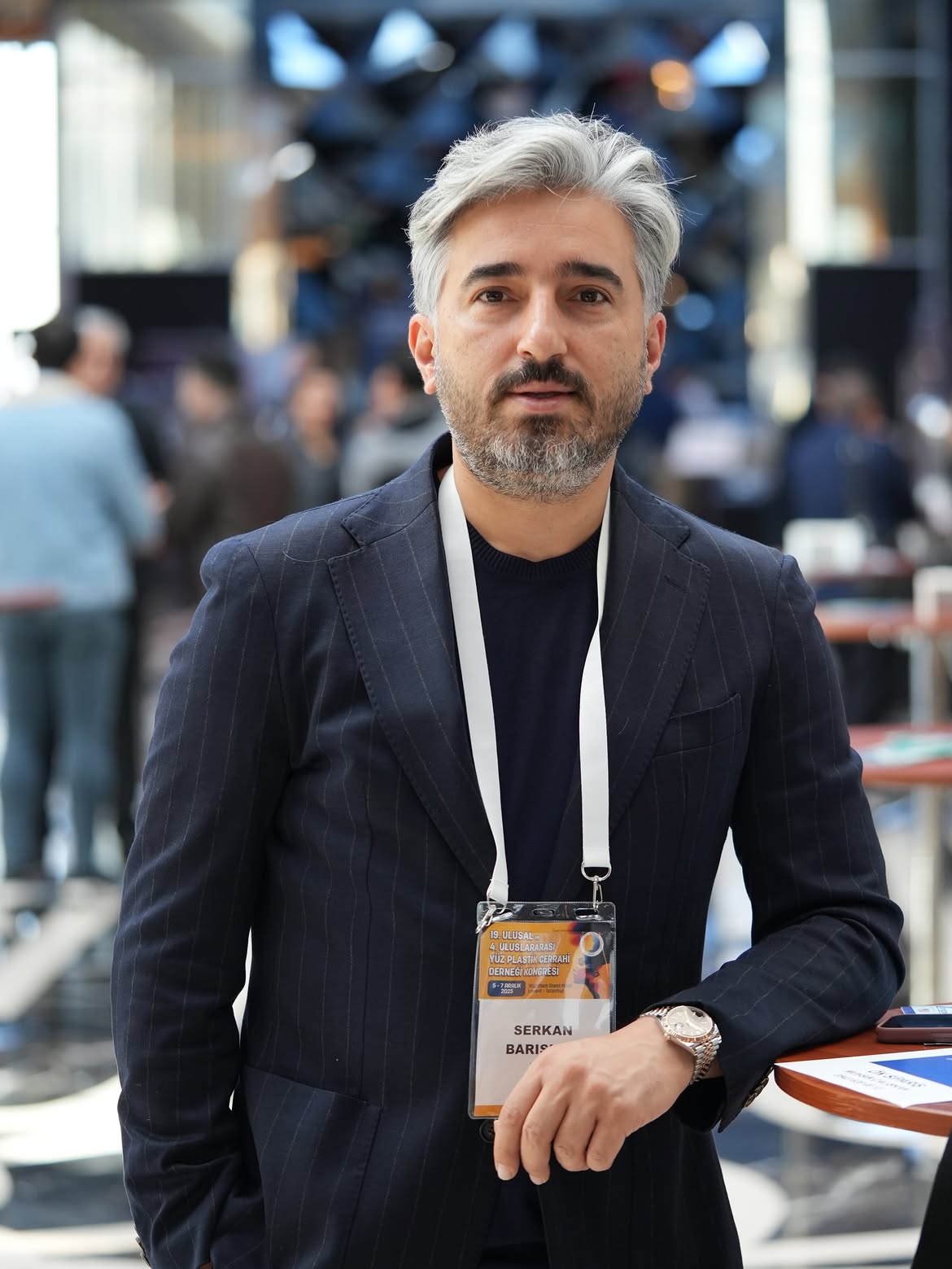
Natural-looking rhinoplasty with Dr. Serkan Barışkan, an ENT and Head-Neck Surgeon in Denizli, Turkey. A personalised approach to subtle nasal refinement that considers facial proportions, structural support and individual aesthetic preferences.
Natural-looking rhinoplasty focuses on refining the nose in a way that complements the individual's facial features. Rather than aiming for a standard shape, surgical planning considers the relationship between the nasal bridge, tip, facial proportions and existing anatomy.
For some people, this may involve subtle adjustments to the bridge or tip. Others may require more extensive changes to address their concerns while maintaining a balanced overall appearance. What looks natural differs from one face to another — it is not simply a smaller or more upturned nose.
The degree of refinement depends on factors such as skin thickness, cartilage structure, nasal support and personal preferences. A natural-looking result is an aesthetic goal rather than a guaranteed outcome. If you would prefer a more defined profile or tip, see attractive nose; both are ways of planning rhinoplasty rather than separate techniques.
Procedure time1.5–3 hours
AnaesthesiaGeneral
Hospital stay1 night
LocationDenizli, Turkey
Time in TurkeyTypically 5–7 days
Cast removedDay 6–7
Back to work~2 weeks
Tip settles6–12 months+
Follow-upRemote, first year
Typical ranges only — not guaranteed, and they may vary with your surgical plan. Your own plan — technique, timings and anaesthesia — is confirmed at consultation.
Natural-looking rhinoplasty is not necessarily about making the nose smaller. It involves identifying which changes may improve the relationship between the nose and the rest of the face while respecting individual preferences.
Some people prefer a straighter bridge, while others are interested in subtle tip refinement or changes to overall nasal proportions. Careful surgical planning helps establish realistic goals based on the existing anatomy and the extent of change that may be appropriate.
Results
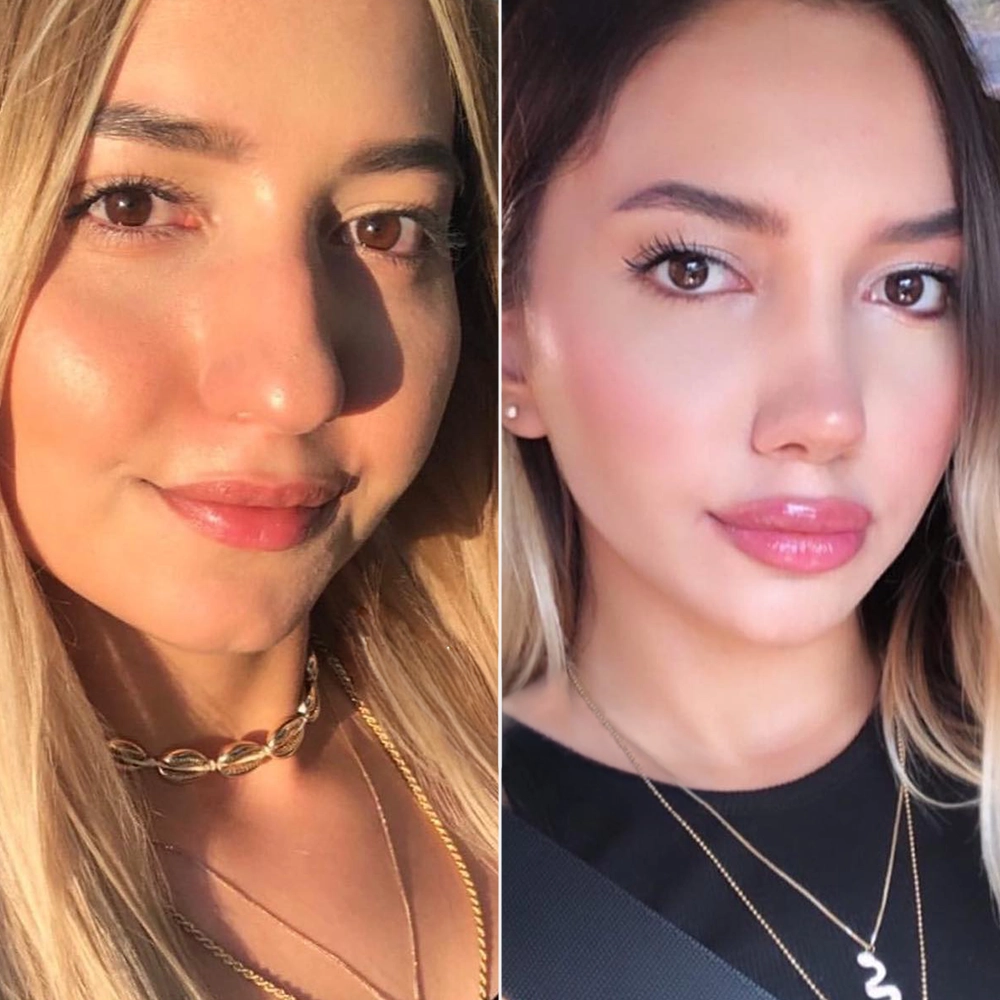
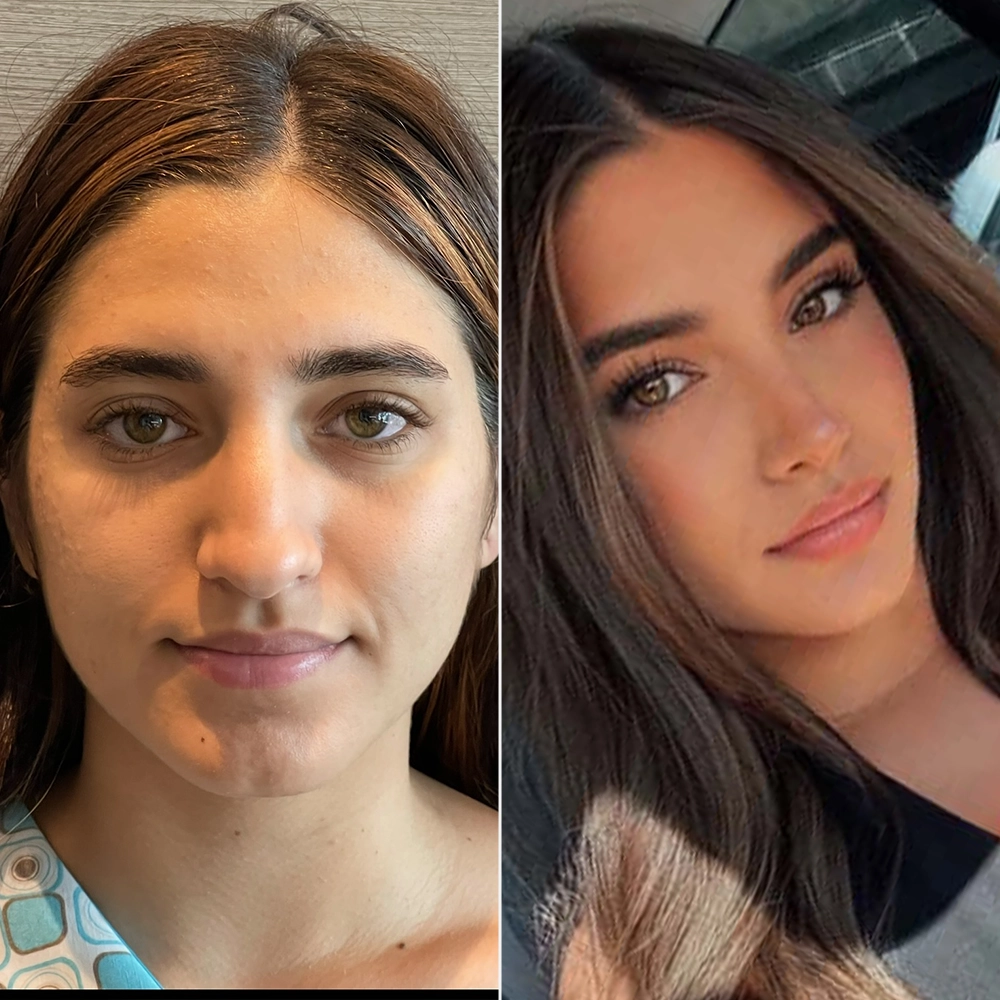
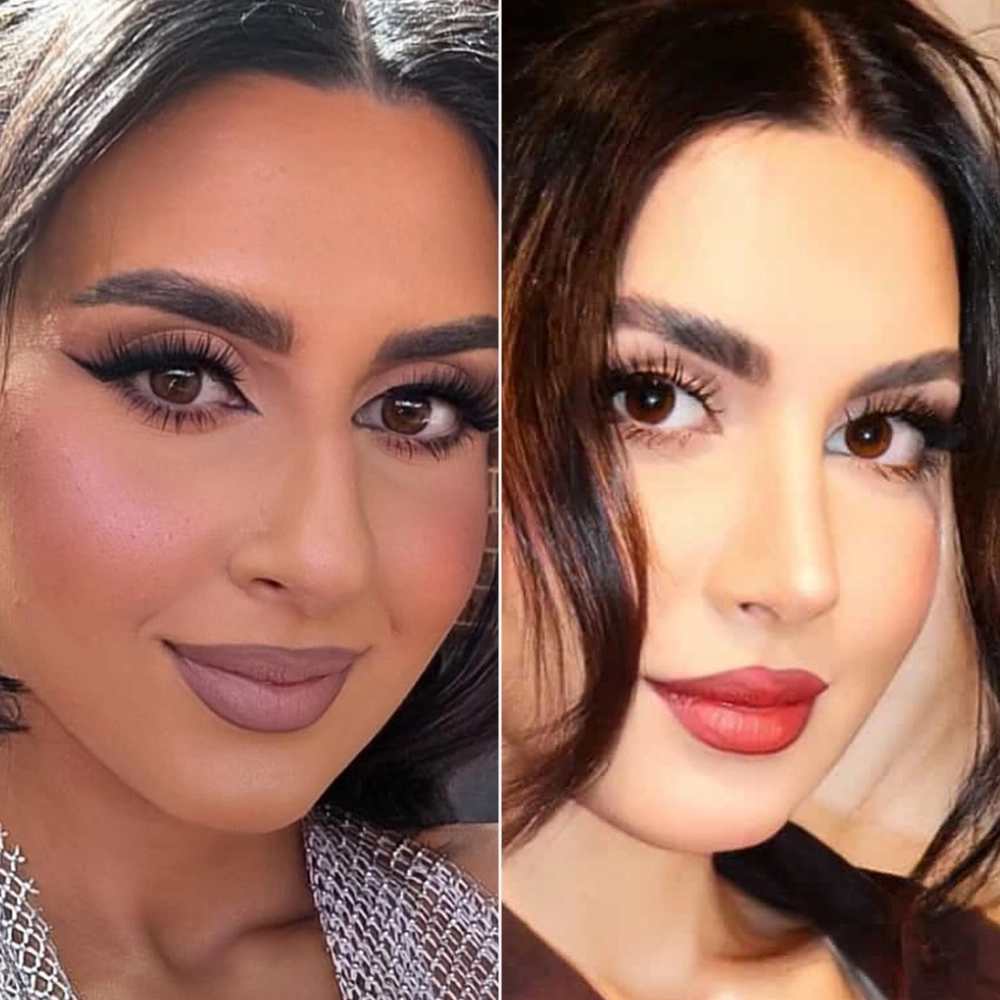
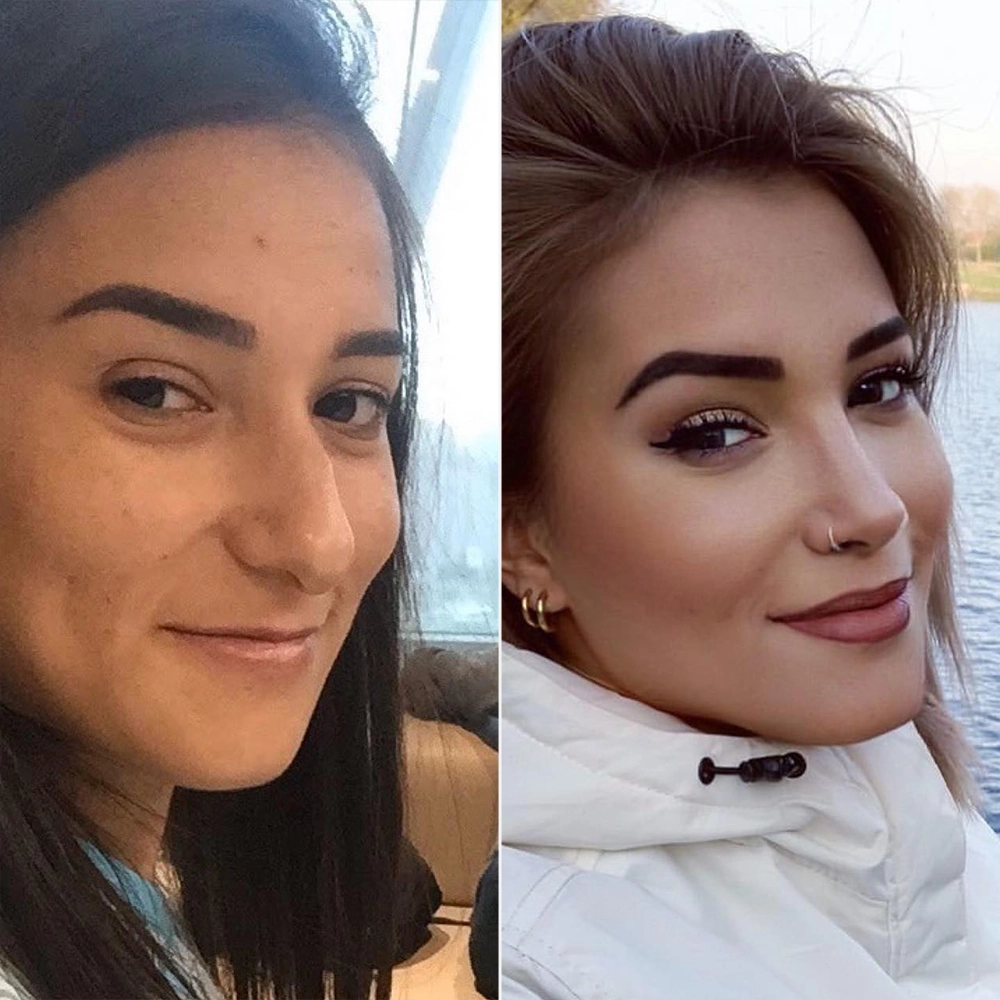
Natural nose before & after
Explore individual rhinoplasty cases and how subtle changes to nasal shape, profile and proportions may contribute to a natural-looking appearance. Every surgical plan is based on the patient's anatomy and individual preferences.
Natural NoseCase 01
Case focus
Natural facial harmony
Natural-looking rhinoplasty considers how the nose relates to the rest of the face. Surgical planning focuses on proportionate changes that complement individual facial features rather than creating a standard nose shape.
Natural NoseCase 02
Case focus
Subtle profile refinement
Subtle adjustments to the nasal bridge or profile may help create a more balanced appearance. The extent of refinement depends on the existing structure, facial proportions and personal aesthetic goals.
Natural NoseCase 03
Case focus
Natural nasal tip definition
Nasal tip refinement may involve careful adjustments to shape, projection or rotation. The approach considers cartilage structure, skin characteristics and the individual's preferred appearance.
Natural NoseCase 04
Case focus
Proportions & structural support
Natural rhinoplasty planning considers nasal proportions alongside the underlying structural framework. Appropriate support and individual anatomy are important when assessing potential changes to the bridge and tip.
With every surgical or interventional procedure, results may vary from person to person.
Technique
The ENT difference: shape and breathing, as one
A natural-looking result usually depends on restraint and appropriate support. Trained as an ENT surgeon, Dr. Barışkan assesses the nasal structure and function as part of the same plan as the aesthetic changes.
The aim is a nose that complements your own face — balanced, never over-rotated, and never a single template applied to every patient. The extent of change is planned around your anatomy and preferences.
Approach
Surgical access and planning
An open or closed approach may be considered depending on the nasal anatomy and the changes required. The appropriate technique is selected during surgical planning.
Tip
Supported, not just trimmed
Nasal tip cartilage may be reshaped or supported according to the desired refinement and existing anatomy. The approach aims to maintain appropriate structural support.
Airway
Breathing, planned in
The septum and internal nasal structures are evaluated as part of the assessment. Functional corrections may be considered when clinically appropriate.
Structure
Structural support
Cartilage support and grafting techniques may be considered where additional structural support is required. Not every rhinoplasty procedure requires grafts.
Before Surgery
Visualising your natural rhinoplasty goals
Computer imaging may help illustrate possible changes to nasal shape and proportions during consultation. These visualisations support the discussion of aesthetic preferences and surgical planning but do not guarantee the final postoperative result.
The look
What defines a natural-looking result?
01Harmony
A nose that complements your face
Natural-looking refinement considers individual facial proportions rather than a standard nose shape.
A natural-looking approach is not limited to wanting a smaller or slightly upturned nose — suitability depends on your anatomy and your own expectations.
A natural nose may suit you if
You'd like changes that complement your face rather than follow a standard shape
You are open to a plan shaped by your skin, cartilage and proportions
You want it to look natural, not obviously done
You'd like the bridge and tip balanced to your face
You're in good general health and your facial growth is complete
We'd talk it through first if
You want an extreme change, such as strong tip rotation, that your anatomy may not safely support
You have thicker skin — it can still suit a natural-looking result, but it may affect how defined the tip becomes and how long swelling takes to settle
You can't commit to the follow-up and recovery period
Your expectations may not be achievable within the limitations of your nasal anatomy or the available surgical options
Patients' Experience
Straight from the clinic
Short clips from real visits — including cast-removal day.
Your Trip
Your rhinoplasty week in Denizli
A typical plan — timings such as cast removal, travel and follow-up are not guaranteed and are confirmed for each patient. See the full patient journey →
Before you fly
Consultation
Analysis of your facial proportions with computer imaging, and a plan agreed before you book flights.
Remote or in person
Day 01
Arrival
Airport transfer, accommodation, and your pre-operative assessment.
Denizli
Day 02
Surgery
The procedure itself, with a full surgical team and an overnight stay.
Hospital
Days 03 — 07
Recovery & Cast Removal
Guided recovery and a postoperative review — your surgeon advises when you may travel.
Then home
Ongoing
Follow-Up
Remote check-ins through the first year, with direct access between them.
Wherever you are
The Surgery
How is natural-looking rhinoplasty performed?
Natural-looking rhinoplasty is usually performed under general anaesthesia and typically takes around 1.5–3 hours. Bone and cartilage are reshaped only where needed to reach the agreed plan, with functional corrections and grafts included when clinically appropriate — not every step applies to every patient.
Step 01
Anaesthesia
General anaesthesia is commonly used for comprehensive rhinoplasty. The anaesthetic approach is confirmed according to the individual surgical plan.
Step 02
Surgical access
The surgical approach is selected according to the nasal anatomy and the changes planned.
Step 03
Nasal reshaping
Bone and cartilage may be reshaped or repositioned where necessary to achieve the agreed surgical goals.
Step 04
Septum & airway
The septum and internal airway structures are assessed, and functional corrections may be performed where clinically appropriate.
Step 05
Profile & tip refinement
The nasal bridge and tip are assessed together to support the planned changes and overall facial proportions.
Step 06
Closing & support
The surgical access is closed, and appropriate support or dressings are applied. Additional cartilage grafts may be used when required.
Recovery
How long does natural rhinoplasty recovery take?
Many patients gradually resume everyday activities within two to three weeks, although recovery and activity restrictions vary. Swelling keeps decreasing over the following months, and subtle changes in nasal shape and tip definition may continue for a year or longer — healing depends on individual anatomy and the surgery performed.
Days 1–2
Early recovery
Swelling, bruising and temporary congestion may occur during the first few days. Postoperative care follows the surgeon's instructions.
Days 6–7
Postoperative review
External support or sutures may be removed when appropriate. Your surgeon assesses healing and advises when you may travel.
Weeks 2–3
Returning to routine
Many patients gradually resume everyday activities, although recovery and activity restrictions vary.
Months 1–3
Gradual improvement
Swelling continues to decrease, and nasal contours become more visible. Some residual swelling may remain.
Months 6–12+
Continued refinement
Subtle changes in nasal shape and tip definition may continue for a year or longer, depending on individual healing and the extent of surgery.
Recovery varies from person to person; no fixed healing date or travel clearance can be promised in advance.
Aftercare
Supporting your recovery
Do
Sleep with your head elevated for the first couple of weeks
Keep to the cleaning and rinse routine you're given
Attend every remote follow-up check-in
Protect your nose from sun and any knocks
Avoid
Blowing your nose or resting glasses on the bridge early on
Strenuous exercise or heavy lifting for a few weeks
Smoking, which slows healing
Saunas and sunbeds until you're cleared
Safety
Natural rhinoplasty risks and safety
How safety is protected
Your operation is performed by Dr. Barışkan himself — an ENT & head-neck surgeon, one operation a day, never delegated
A fully equipped, accredited private hospital in Denizli with a full surgical and anaesthetic team
Complete pre-operative tests, and an anaesthetic assessment before surgery
Authorised under the Turkish Ministry of Health's health-tourism programme
A plan built from your own anatomy, with structured follow-up through the first year
Risks to be aware of
All surgery carries risk — bleeding, infection and reactions to anaesthesia
Nasal asymmetry, or a result that differs from the planned appearance
Breathing problems that continue or develop after surgery
Delayed or irregular wound healing
The possibility that a further procedure is needed — which may be more than a minor touch-up
Healing varies between individuals — results cannot be guaranteed
Cost
How much does natural-looking rhinoplasty cost in Turkey?
There is no fixed price list. The scope of surgery, the changes planned to the bridge and tip, how much structural support is needed, any functional procedures and the hospital and operating plan all affect the quote — so you receive a personalised quote once your photos or consultation have been reviewed. A photo review is an initial assessment, not a diagnosis or final surgical plan.
What's included in your quote
Consultation & structural analysis
The procedure
Accommodation guidance
Airport transfers
Follow-up care through the first year
Get your estimate
Share photos — front, profile, three-quarter and base view — and tell us what you would like to change. You'll receive an initial assessment and cost estimate, with no obligation.
Google reviews from Dr. Barışkan's rhinoplasty and septorhinoplasty patients, shown in their own words. Each review is labelled with the procedure the patient had.
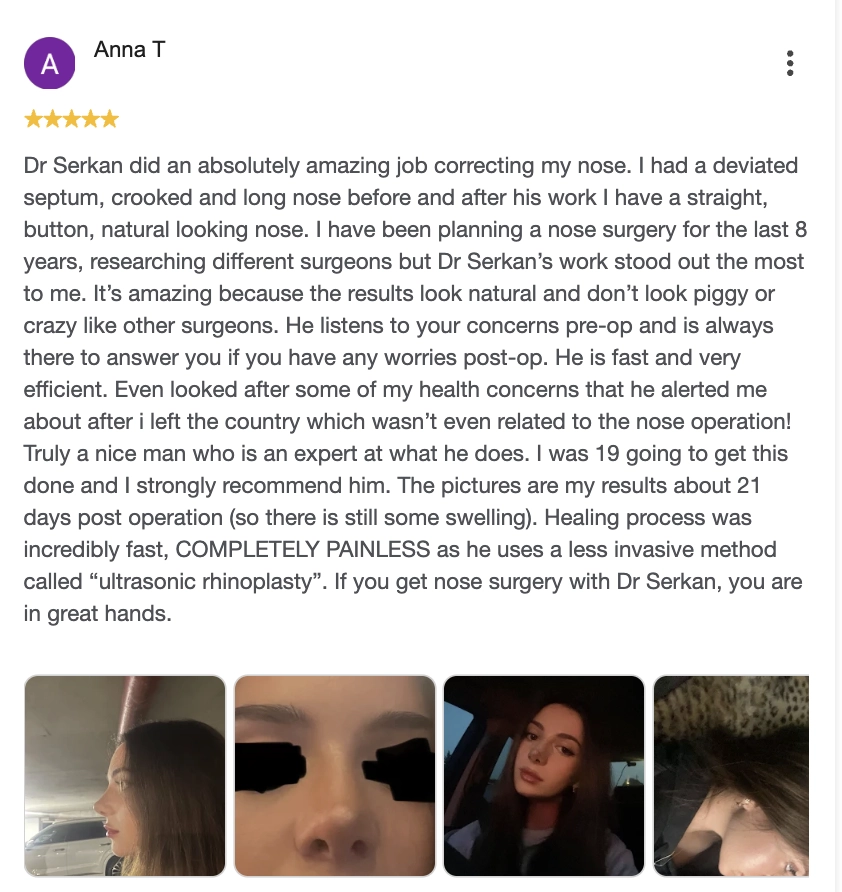
★★★★★21 days post-op
Dr Serkan did an absolutely amazing job correcting my nose. I had a deviated septum, crooked and long nose before and after his work I have a straight, button, natural looking nose. I have been planning a nose surgery for the last 8 years, researching different surgeons but Dr Serkan’s work stood out the most to me. It’s amazing because the results look natural and don’t look piggy or crazy like other surgeons. He listens to your concerns pre-op and is always there to answer you if you have any worries post-op. He is fast and very efficient. Even looked after some of my health concerns that he alerted me about after i left the country which wasn’t even related to the nose operation! Truly a nice man who is an expert at what he does. I was 19 going to get this done and I strongly recommend him. The pictures are my results about 21 days post operation (so there is still some swelling). Healing process was incredibly fast, COMPLETELY PAINLESS as he uses a less invasive method called “ultrasonic rhinoplasty”. If you get nose surgery with Dr Serkan, you are in great hands.
Anna T
Google
Rhinoplasty
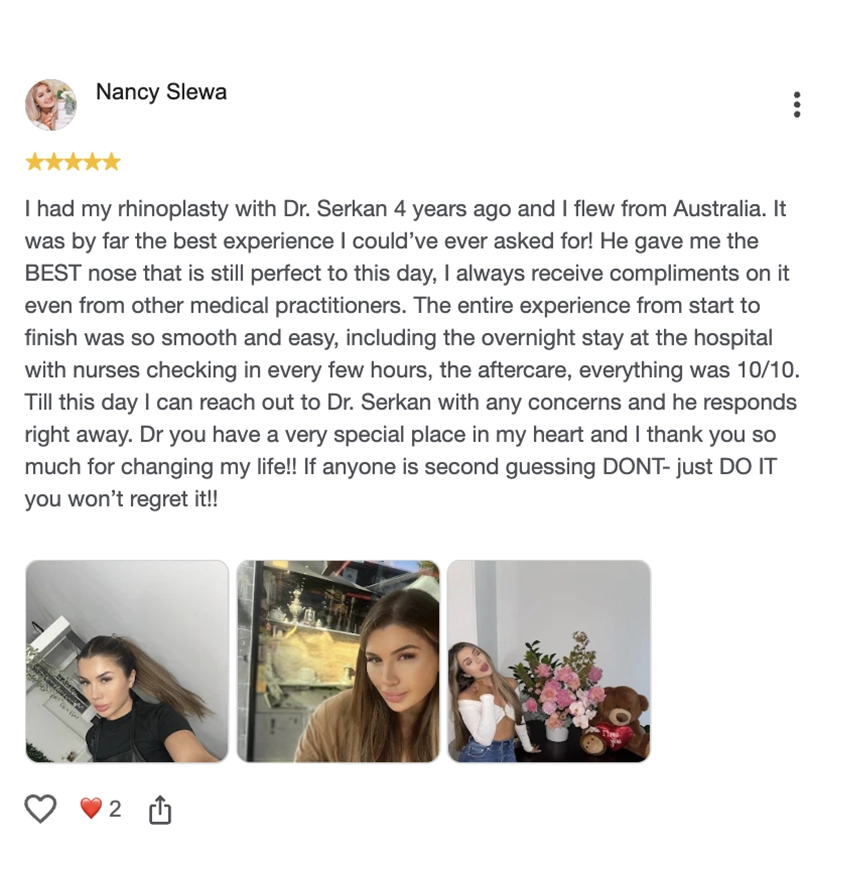
★★★★★4 years post-op
I had my rhinoplasty with Dr. Serkan 4 years ago and I flew from Australia. It was by far the best experience I could’ve ever asked for! He gave me the BEST nose that is still perfect to this day, I always receive compliments on it even from other medical practitioners. The entire experience from start to finish was so smooth and easy, including the overnight stay at the hospital with nurses checking in every few hours, the aftercare, everything was 10/10. Till this day I can reach out to Dr. Serkan with any concerns and he responds right away. Dr you have a very special place in my heart and I thank you so much for changing my life!! If anyone is second guessing DONT - just DO IT, you won’t regret it!!
Nancy Slewa
Australia · Google
Rhinoplasty
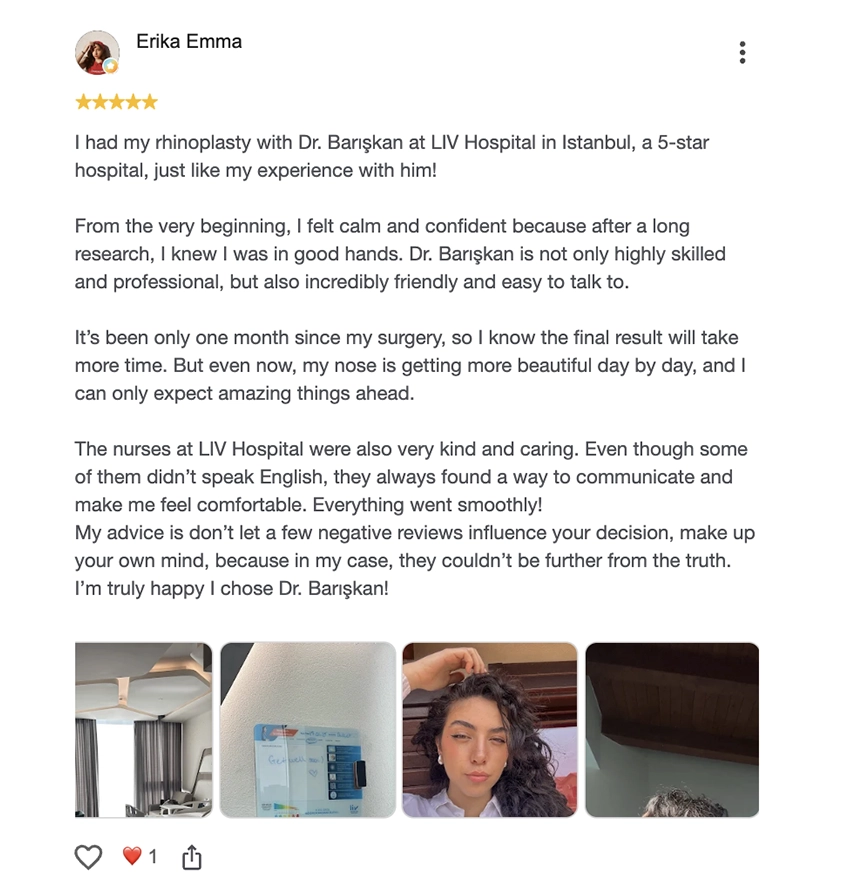
★★★★★1 month post-op
I had my rhinoplasty with Dr. Barışkan and it was a 5-star experience, just like the hospital! From the very beginning, I felt calm and confident because after a long research, I knew I was in good hands. Dr. Barışkan is not only highly skilled and professional, but also incredibly friendly and easy to talk to. It’s been only one month since my surgery, so I know the final result will take more time. But even now, my nose is getting more beautiful day by day. The nurses were also very kind and caring — even though some of them didn’t speak English, they always found a way to communicate and make me feel comfortable. Everything went smoothly! My advice is don’t let a few negative reviews influence your decision, make up your own mind. I’m truly happy I chose Dr. Barışkan!
Erika Emma
Google
Rhinoplasty
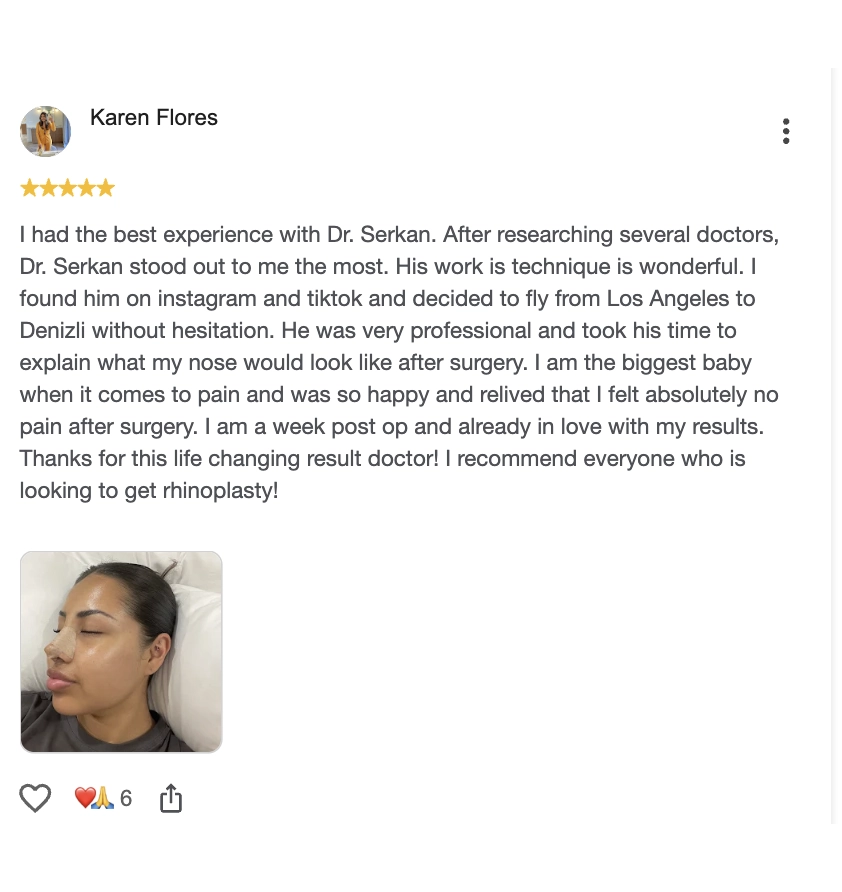
★★★★★1 week post-op
I had the best experience with Dr. Serkan. After researching several doctors, Dr. Serkan stood out to me the most. His work is wonderful. I found him on instagram and tiktok and decided to fly from Los Angeles to Denizli without hesitation. He was very professional and took his time to explain what my nose would look like after surgery. I am the biggest baby when it comes to pain and was so happy and relieved that I felt absolutely no pain after surgery. I am a week post op and already in love with my results. Thanks for this life changing result doctor! I recommend everyone who is looking to get rhinoplasty!
Karen Flores
United States · Google
Rhinoplasty
★★★★★2022
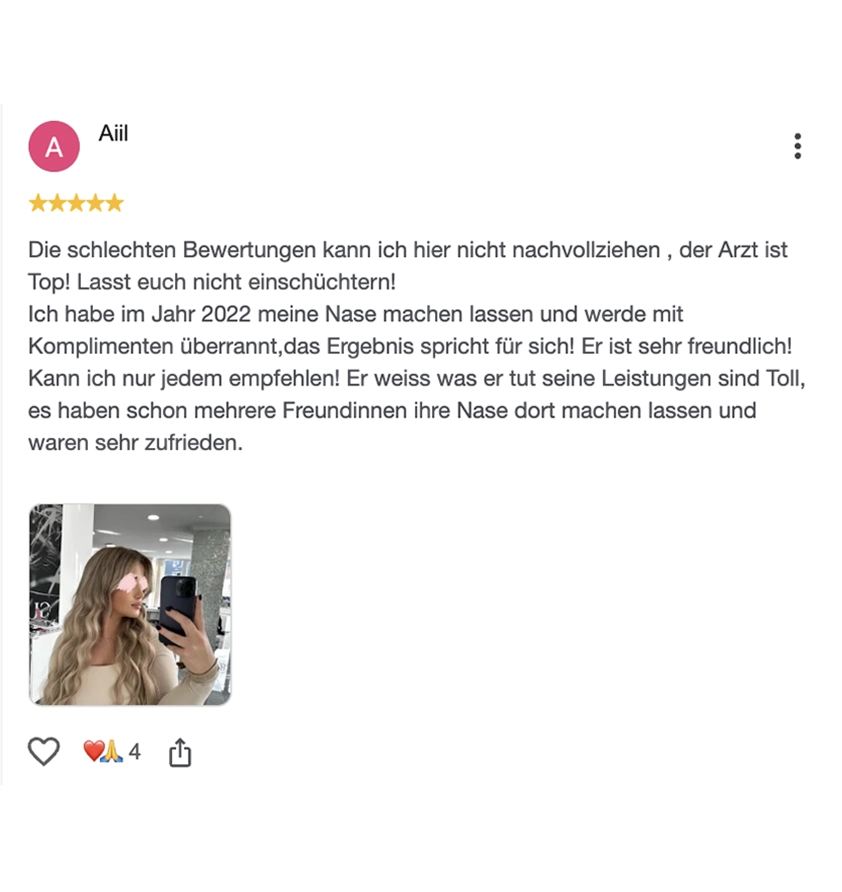
Die schlechten Bewertungen kann ich hier nicht nachvollziehen, der Arzt ist Top! Lasst euch nicht einschüchtern! Ich habe im Jahr 2022 meine Nase machen lassen und werde mit Komplimenten überrannt, das Ergebnis spricht für sich! Er ist sehr freundlich! Kann ich nur jedem empfehlen! Er weiss was er tut, seine Leistungen sind Toll, es haben schon mehrere Freundinnen ihre Nase dort machen lassen und waren sehr zufrieden.
Aiil
Germany · Google
Rhinoplasty
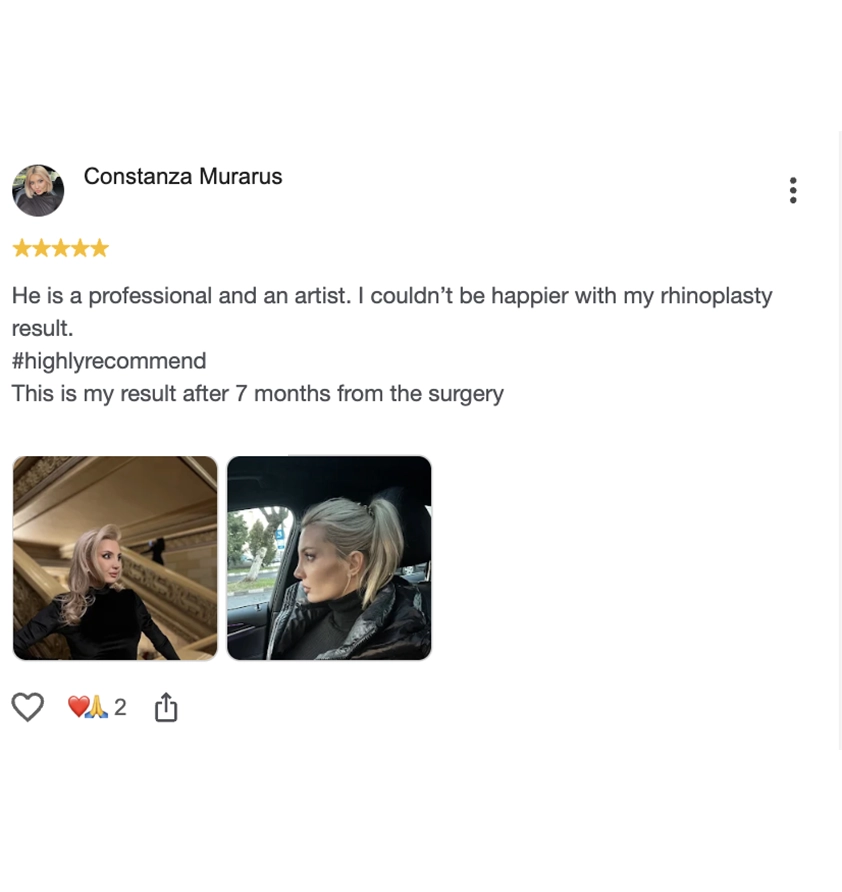
★★★★★7 months post-op
He is a professional and an artist. I couldn’t be happier with my rhinoplasty result. Highly recommend. This is my result after 7 months from the surgery.
Constanza Murarus
Google
Rhinoplasty
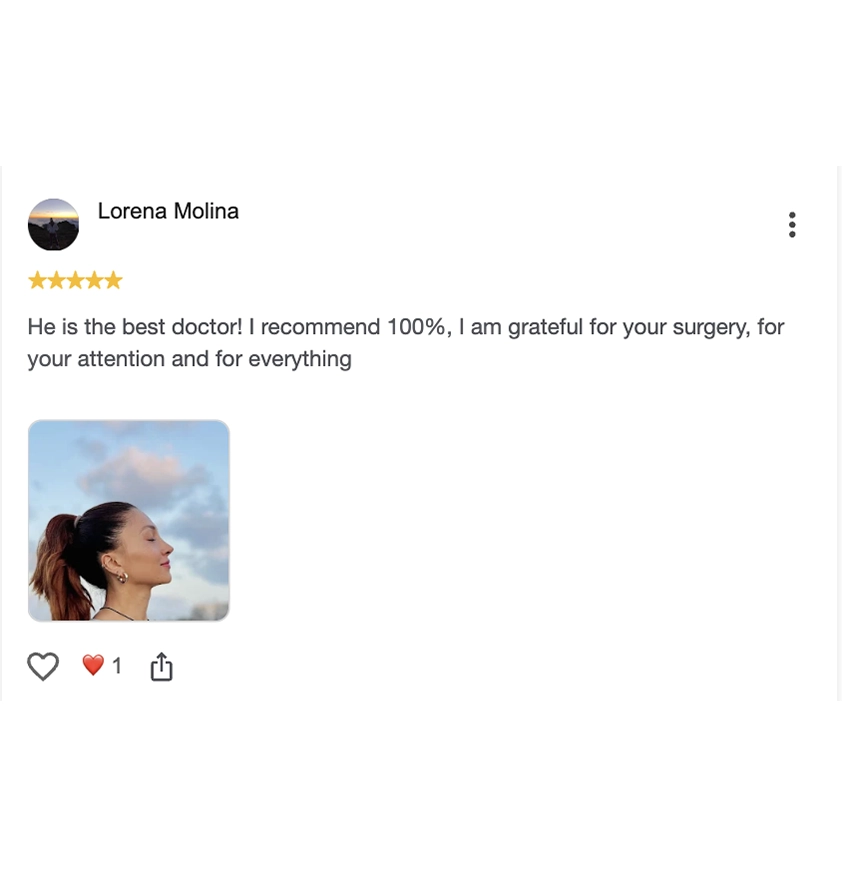
★★★★★
He is the best doctor! I recommend 100%, I am grateful for your surgery, for your attention and for everything.
Lorena Molina
Google
Rhinoplasty
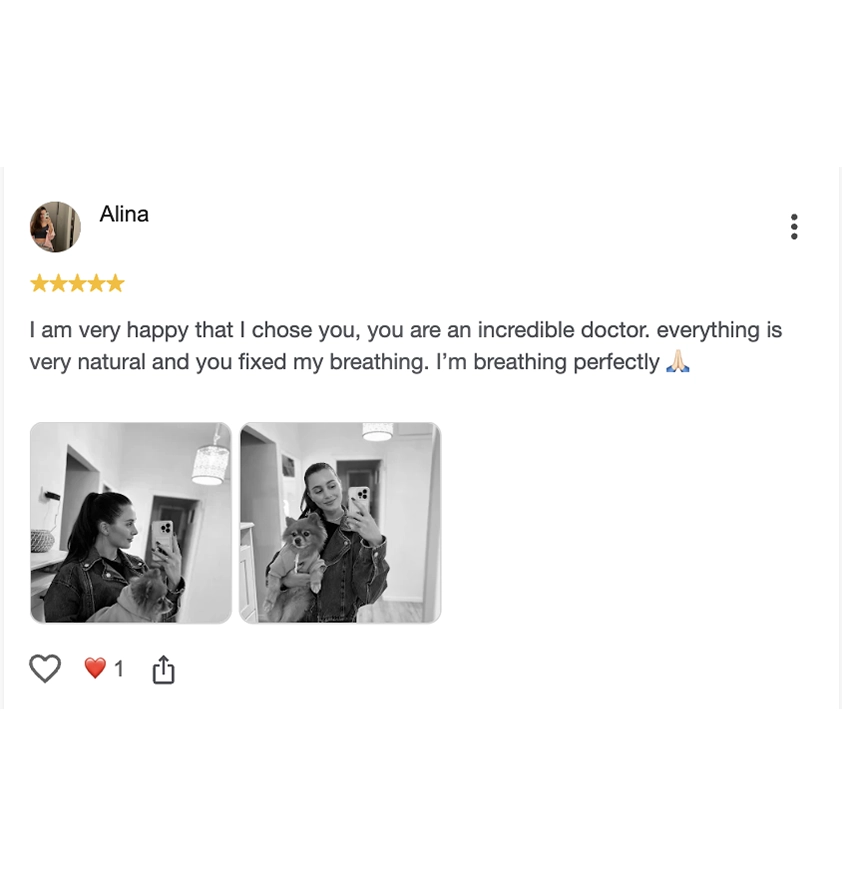
★★★★★
I am very happy that I chose you, you are an incredible doctor. Everything is very natural and you fixed my breathing. I’m breathing perfectly.
Alina
Google
Septorhinoplasty
Common Questions
Natural Nose in Turkey: FAQs
A natural-looking result is planned around individual facial proportions, nasal anatomy and personal preferences. It does not refer to one standard nose shape.
No. Natural-looking rhinoplasty may involve subtle changes to the bridge, tip or overall proportions without necessarily reducing nasal size.
The possible degree of refinement depends on the existing nasal anatomy, skin characteristics and surgical limitations. A personalised assessment helps establish realistic goals.
Nasal function is considered during surgical planning, but all surgery carries some risk of functional changes. Any existing breathing concerns should be discussed during assessment.
Rhinoplasty aims to produce lasting structural changes, although healing, ageing and individual tissue changes may affect the appearance over time. A particular long-term result cannot be guaranteed.
Yes. Reference photographs may help communicate your aesthetic preferences, but the same result may not be suitable or achievable with your anatomy.
Swelling gradually improves over several months, with subtle refinement sometimes continuing for a year or longer. Healing times vary between individuals.
The recommended stay depends on the surgical plan and postoperative assessment. Your surgeon will advise when you are ready to travel.
An open approach involves a small external incision across the columella, while a closed approach uses internal incisions. Scar appearance depends on the surgical technique and individual healing.
Accountability
Medically reviewed by
Reviewing Surgeon
Op. Dr. Serkan Barışkan
ENT & Head-Neck Surgeon · Rhinoplasty & Functional Nose Surgery · Denizli, Turkey
TTB RegisteredENT (KBB) SpecialistHead & Neck Surgery
Last reviewed October 2026. The clinical information on this page is written and reviewed by the operating surgeon. It is general guidance, not a substitute for a personal consultation.
Consultation
Start with a free photo assessment
Send a few photos and tell us what you'd like to change — you'll get a personalised plan and cost estimate, with no obligation.